In an era where movement has become commercialized, fast-paced, and trend-driven, Classical Pilates sits proudly in a different category.It is precise, disciplined, lineage-based and yes, often priced higher than other Pilates classes.
But there is a reason for that. Several, in fact.
To begin, Classical Pilates demands a level of teacher training that is exceptionally rare in the fitness industry. Instructors complete 600 to 900+ hours of rigorous education, mentorship, practice teaching, anatomy study, exams, and hands-on apprenticeship. This is not a weekend certification or a quick online course. It is a deep, structured training designed to preserve Joseph Pilates’ original work with precision and integrity. When you walk into a classical class, you are guided by someone who has invested years into mastering the method, someone who understands your body, your alignment, and how to safely progress your practice through a system, not a sequence of random exercises. You are paying for unmatched expertise, not just movement.
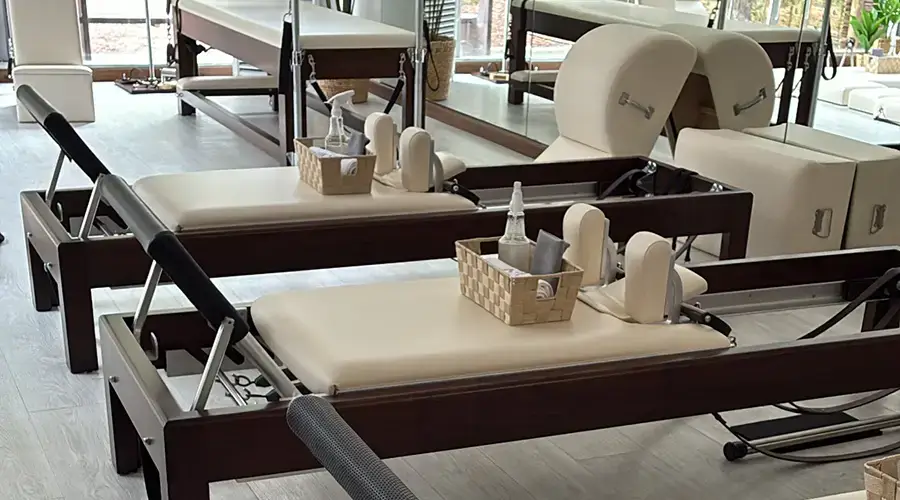
The equipment also plays a major role in why Classical Pilates carries a higher cost. Authentic apparatus from brands like Gratz, Contrology, and Legacy are handcrafted, built in small batches, and made to Joseph Pilates’ exact specifications. They are not mass-produced reformers found in typical gyms or commercial studios. Every piece, from the Reformer to the Wunda Chair, Cadillac, High Chair, and Barrels, is engineered for precision and long-term durability. Outfitting a true classical studio requires significant investment, far beyond a single reformer-based setup. When you train on authentic apparatus, you feel the difference immediately: the resistance, the springs, the carriage weight, the stability. Everything supports proper technique and deeper results.
Classical Pilates is also the complete system, not just one machine. Clients move through an entire ecosystem of apparatus designed to strengthen the body from every angle. This means the studio must invest in multiple pieces per client, not just one reformer for everyone. The method is holistic and interconnected, and maintaining this full environment comes at a premium.
Another reason for the higher cost is the nature of the class experience. Classical Pilates prioritizes quality over quantity, meaning class sizes are intentionally small. Teachers must be able to see every body, correct alignment, adjust the work, and guide clients individually even in a group setting. This level of attention is impossible in large, high-volume classes, which is why classical studios refuse to compromise on capacity. Fewer people per class naturally increases the cost, but it dramatically enhances the results and the safety of the practice.
Finally, Classical Pilates offers something that cannot be found in trend-based fitness: long-term transformation. The method doesn’t chase the burn, the sweat, or the aesthetic trends of the moment. Instead, it strengthens the body from the inside out, improving posture, breath, mobility, control, and overall functionality. Clients feel supported, not exhausted; aligned, not overstimulated; connected, not depleted. When you pay for Classical Pilates, you are investing in a method that delivers lasting, meaningful change, not a quick workout that fades the moment you leave the studio.
In truth, Classical Pilates is more expensive because it is more intentional, more educated, more specialized, and more complete. It requires highly trained instructors, handcrafted apparatus, small class sizes, thoughtful structure, and unwavering dedication to quality. At studios like The Method, the goal is not to follow trends but to preserve a lineage, a discipline that has stood the test of time because it works.
Classical Pilates is not just a class. It is a method, an investment, and a standard of excellence. And for those who experience it, it is worth every dirham.